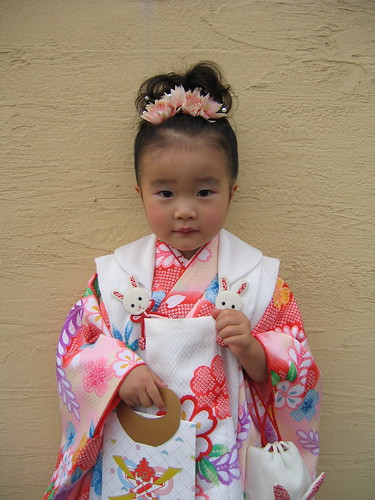
Monday, January 16, 2006

The concept of honesty in Japan, our New Year's Day prayer, and winter snow report

I've always believed that people will be what you expect them to be, and if you assume that people are honest, they generally won't let you down. This principle seems to be at work in Japan, a country that certainly has more than its share of honest, upstanding people. One of my first experiences in culture shock here was going to my local Seven Eleven and seeing a brand-new car in the parking lot with the key in the ignition, idling away while their owner ran in to pick up some milk or eggs. I can't say that I've seen too many cars sitting unlocked with the engines running in the U.S., but here no one thinks much about it here, since no one would be so rude as to actually steal your car. An American friend of mine recently went to test-drive a new car, and the dealer handed him the key without even getting a copy of his license, which surprised him too -- the dealer just forked over the key and told him to have fun with the test-drive. Another friend managed to lose his wallet no less than four times in different parts of the country, once as far away as Kyoto, and all four times the wallets were delivered to the police with cash intact. There is crime in Japan, to be sure, and bad people here just like everywhere else, but by and large I've been happy with the honesty I've encountered during my time here.

Yesterday was New Year's Day for us, as we did our Hatsu-moude (ha-tsu MOH-day) or first prayer of the New Year, which is usually done on Jan. 1st. We pulled out all the stops, visiting our local Shinto Shrine to throw money in the offering box, then made our wishes for health and happiness in 2006. We got our omikuji, a kind of extended fortune cookie without the cookie, that gives advice about the coming year and what you should be cautious of. Finally, we bought a new Daruma for our house, a New Year's custom. Our not-quite-New Year's Day continued, as we went to visit my wife's uncle, the one who fought in World War II and would have gone off to die with the Yamato if his ship hadn't developed a convenient mechanical problem at the last minute (he's got a killer scar on his face from a piece of shrapnel from an American bomb). At his house, we played a traditional card game called Karuta, in which players must listen to segments of Japanese history and find the the same text in cards laid out on the table, a fun way to teach kids history they wouldn't otherwise be able to learn.

It's been a rough winter in Japan so far, with parts of the country receiving record snowfall, even places along the Sea of Japan that are used to a lot every year. The problem has been so bad that huge amounts of snow piling up on older houses have been causing them to collapse, killing the usually-elderly inhabitants -- a staggering 90 people have died since the heavy snows began. Warm weather after the heavy snowfall has added to fear of avalanches in parts of the country, and in some places the Self-Defence Forces have been dispatched to help people deal with the snow.

We have some good news for fans of Yulia Nova, the lovely Russian goddess whose DVDs J-List carries exclusively: we've gotten her newest DVD titles in stock for you today! The three new Yulia DVDs feature all-new footage shot over the past year, and let you enjoy Yulia's beauty and Moscow in the Spring, Summer and Winter.

We're declaring war on our remaining stock of 2006 calendars, slashing the prices on almost everything while we close it all out. We've still got an amazing selection of traditional calendars (Famous Castles of Japan, soba noodles), anime calendars (Tsubasa Chronicle, Pokemon, more), JPOP (Morning Musume, BoA), lovely bikini idols (Yu Yamada, Nana Katase), Japanese pro wrestler calendars, classic Japanese cars, and more. Once these calendars are gone they'll be gone for good, never to come back again. Why not browse our calendar selection and find something special to hang up in your home, office, dorm or wherever. The large poster-sized calendars J-List sells are printed exclusively for the Japanese domestic market and aren't available outside of Japan.


We interrupt the adult video show for...Peter's Hatsu-Moude trip. This is our family's Shinto Shrine, which has a huge tunnel of torii arches for you to pass through.


My son Kazuki.


The actual praying. There's something about times when you clap three times before praying (to get the God's attention) and other times when you don't. This was a "don't clap" time.


This is "Red Fox" (Akai Kitsune, no relation to Samson & Son) that means...something. At this shrine, you put abura-age or fried tofu as an offering. This is somehow related to a popular udon-in-a-bowl you can buy, Akai Kitsune, which has fried tofu inside.


We also bought our omamori for the year, which must be replaced on an annual basis. We bought kotsu anzen (traffic safety) charms for the kids, a health one for me, and a "success in business" one for our company.

Saturday, January 14, 2006

The music scene in Japan, ways to stay cheaply in Japan, and all about Valentine's Day

The music scene in Japan is rich and varied, with its own unique ebbs and flows of visual rock, hip hop, R&B, indies and even enka, the traditional music that fills the same role for the Japanese as country music does in the U.S. The flagship of Japan's music scene is JPOP, and just as anime and manga have found a place in the hearts of fans all over the world, there is no aspect of Japan's pop world that isn't followed by aficionados in other countries. It's interesting to live in Japan and watch the march of progress in the pop scene here, the rise and inevitable fall of influential producers like Tetsuya Komuro (whose "Komuro Family" ruled the 1990s), Morning Musume creator Tsunk, and boy-band kingmaker Johnny Kitagawa of Johnny's Entertainment Group. Every year there are various music-related fashion trends, like when Amuro Namie created a generation of "Amullers" that imitated her slinky style, or the effect on fashion of the chic Kumi Kouda now. The past is often prelude, too: when we started J-List in 1996, there was no hotter JPOP team than Ami and Yumi of Puffy. Now, a decade later, they've made a name for themselves outside of Japan and even have their own cartoon series. Currently a bubblegum pop song by mock Pro Wrestler and comedian Koriki and his stylish backup singers is one of the most popular songs in Japan -- see the music video right here.

Back when I was single, I did a fair bit of traveling around Japan, hitchhiking or riding trains on "Youth 18" tickets, which allow you to go anywhere in Japan for around $25 a day, as long as you don't mind taking 14 hours to get from Osaka to Tokyo. (Poor gaijin like me who live in Japan don't get to buy the spiffy Japan Rail tickets that tourists from overseas have access to.) I've been from Hokkaido to Hiroshima and have really enjoyed getting out and seeing the country. During my travels I've stayed at various places, including conventional "business" and less-conventional "love" hotels, western-style youth hostels, minshuku (a kind of Japanese bed & breakfast where everyone eats and sleeps in a big communal room), and "saunas" (a public bath with a sauna with a central room where you can sleep on the floor for free, trying to ignore the snores of everyone around you). But I've always been a fan of capsule hotels, the miniature honeycomb-like hotel rooms found in larger Japanese cities, a great way to sleep on the cheap. Inside your capsule you have everything you need: bed, blanket, pillow, a little TV, radio with alarm, and a curtain for privacy. Capsule hotels usually have large communal baths and saunas, too. They're cheap, too: you can stay in the heart of Tokyo's hip Shibuya district for around $40.

Valentine's Day is not far off, in case you wanted to do something special and Japan-related this year. Rather than being a day for couples to go on a special date together, "Valentine Day" has become a day for women to show their devotion to men by giving them chocolate. For casual giving there are hundreds of prepackaged chocolate gift boxes sold in stores, and often female office workers will give small boxes of giri choco or "obligation chocolate" to male co-workers to be nice to them, knowing that they will get a return gift on March 14, designated as White Day. Girlfriends, wives and daughters will often make hand-made chocolates for their special men to show their love and thank them for working hard. If you'd like to give this a try this year, we've got a selection of chocolate molds that you can pour melted chocolate or cake mix into, and J-List sells dozens of amazing chocolate treats from Japan, from Japan-only Kit Kat varieties to Pocky and much more.


This is Charlie and Helicopter Man.


Another beautiful girl, dressed as a Miko, or Shinto Shrine Maiden.


Giant penis. Getting it up every day was a big challenge.


We all really liked the tall girl, who towered above me.

Thursday, January 12, 2006

Standing in the "Nihonjin Line" at Narita, Japan's truck gap, and Japanese tax-related civic spirit

"You know you've been in Japan too long when you think it's cool to stand in the 'Japanese only' line at Narita airport." The first time a foreigner comes to Japan, he stands in the line for gaijin with the other foreigners while his paperwork is processed. Visa-holders who leave Japan intending to return must get a special re-entry stamp in their passports, and if you have this you get to stand in the shorter line for Japanese -- and this is what I did yesterday, after my 10+ hour flight from LAX to Narita, which brought me back to my cold, windy adopted country. After clearing customs, I took advantage of one of the great conveniences of Japan, Yamato Delivery Service, who will take a person's heavy suitcase and deliver it to their door for around $15, saving me from lugging it onto the bus. Yearning for a taste of home, I bought a quick onigiri, a triangular ball of rice with nori seaweed on the outside and salmon on the inside, and some oolong tea, and got on the Azalea Bus (named after the official flower of our prefecture, Gunma) for home.

Whenever I flip between the U.S. and Japan I know I'm in for a little culture shock, whether it's being amazed at the giant size of a "small" drink at McDonald's in the States or the "short" capuchinos sold at Starbucks in Japan. This time I was struck by the cars I noticed on the road. For the most part, the cars in Japan are pretty much the same ones you see in any other country, although they often have funny names like Soarer, Town Bee, Bongo Friendee, Thanks Chariot and Super Saloon. But there's one category of auto that's almost totally missing from Japanese streets: the venerable pickup truck. While pickups by Ford, Toyota and other companies comprise a large percent of car sales in North America, the situation is quite different in Japan. Here, the very idea of a "truck" is a boxy, industrial thing, used by companies for hauling but never owned as an icon of convenience or style. Well, que sera, sera, or as the Japanese say, junin toiro, which literally means "ten people, ten colors" (e.g., everyone has their own unique preference).

In many ways Japan's tax system is similar to the U.S., since the two countries follow the GATT, which governs how accounting rules between countries work. Japan's version of the IRS is the Zeimusho (税務署), the Ministry of Taxation, and every city has a Tax Office to organize the collecting of the various national, prefectural and city-level taxes. One difference I've noticed between the U.S. and Japan is that there's a lot more "community building" here, with mechanisms designed to bring about a feeling of happy, patriotic spirit when it comes to paying of taxes for the national good. My mother-in-law is a long-time member of the local Kanzeikai, a formal union of business-owners, accountants and other professionals whose stated goal is the "encouragement of honest and accurate paying of taxes." Last year the Kanzeikai members took a government-sponsored trip to Mongolia to see how taxes are collected in that country -- the 15% sales tax there made Japan's 5% consumption tax look very small by comparison. Another activity of the group is to stand on street corners and hand out pocket tissues (the kind you get with J-List orders) with slogans promoting the accurate declaration of income on tax forms as a person's civic duty. They also have seminars to educate members about how important taxes are to society. At one function, my wife was shown an educational movie about what kind of world we'd live in without taxes. For example, if your house was on fire, the fire department would give you a choice of "speedy" or "economy" dispatch services and then charge your credit card before sending out the trucks. The picture above is this year's feel-good "let's all pay our taxes" idol, Yukie Nakama (see her calendar here).

We've got good news for fans of our 2006 calendars: about 30 previously sold-out calendars are back on the site, as we go through and remove old orders in the system. This is a great second chance to get that excellent anime, JPOP, Japanese actress, traditional or other calendar that was sold out before. But our stock is severely limited, so we recommend that you browse our calendars right away before the calendars you want are gone again.

Monday, January 09, 2006

Japanese aesthetics not found in Vegas, how computers display Japanese, and bilingualism

We're on our way back from Las Vegas, tired but sated from our time here. The AVN show was good and we had a lot of fun, although at times I was somewhat overwhelmed by the scale of everything. I found myself thinking of one of the things I like about Japan: the tradition of wabi and sabi. Translatable as "sober refinement and elegant simplicity," the words basically boil down to "less is more," and serve to describe much of what I like about the products we sell at J-List. The girls and products on display at the show were certainly very flashy and nice to look at, but there was definitely something lacking because there was no restraint, nothing left to the imagination. The classic example of the Japanese aesthetic tradition of wabi and sabi says that a single rose in bloom is more beautiful than a whole rose garden. Another example I like to use is the American Godzilla film made back in the 1990s, which made sweeping changes to Toho's long-running series to add elements they thought would appeal to American viewers. Instead of a lone, legendary creature that is the focus of so much of our attention, the American film added hundreds of baby Godzillas for maximum thrill and action at every turn. It definitely lacked the wabi and sabi of the original films.

One of the major challenges for computers over the past two decades was getting to the point where something as complex as Japanese characters could be displayed and used easily, and thankfully, modern OSes like Mac OS X and Windows XP (Pro only) have support for Japanese built-in. Kanji is displayed using two bytes instead of one for English, which allows the 3000 or so complex kanji and kana characters used in Japanese to be expressed. Just as ASCII governs how characters will display on your computer monitor, there are encoding systems that convert bytes to actual Japanese characters. Unfortunately, there are several different codes out there, such as JIS, Shift-JIS and ISO 2022, and every once in a while an email message or web page will be made with the wrong encoding system from the one I've got set, resulting in the dreaded "moji-bake" (MOH-gee bah-KAY), in which text turns into meaningless goobledygook on-screen. Fonts in Japanese work pretty much the same as Western ones, with Postscript, Truetype etc., although since there are so many characters they have to describe, the fonts are huge, with some fonts in my Powerbook weighing in at 10 megs and up. Since Japanese fonts are more complex than western ones, they have room for cool characters, like hearts, pictures of telephones, icons for weather and the "onsen mark" that indicates where hot springs are in Japan. As far as the Japanese font is concerned, the special characters are just alternate kanji defined for words like "telephone" "music" and so on. The additional characters you can type using Japanese fonts helps make online ASCII art-style images like the Mona Neko from the 2ch BBS easier to create.

My Japanese wife and I work hard to raise our children so that they'll be bilingual in both English and Japanese. We do our best to encourage English, for example by buying only DVDs from the U.S., so if the kids want to watch a movie, they have to watch it in English. Getting them to actually speak English at home can be difficult though, since the kids know that I understand Japanese. Pretending not to understand and asking them to repeat what they just said in English doesn't work very well, so we try to come up with other ways to tackle English together. Sometimes we play "American family" and speak only English, but since we all know Japanese, it's hard. What works best is when we leave the kids in the U.S. and then disappear, which naturally forces them to speak English to everyone. There's nothing like immersion for language learning.

For the new update, the J-List staff has posted tons of new products, including new kawaii toys (Noma Neko straps!), Totoro items, anime trading cards, Hello Kitty items, snacks, restocked Domo-kun plush toys, and much more (more than I can write down, having just gotten in from Vegas anyway). For our 18 plus customers, we've got tons of new products too, including new DVDs, UMDs for all Sony PSPs, lovely "H" manga, doujinshi (including futanari), and a lot more. See all the new items on the site now -- see them all here.

Remember that J-List has extended our free shipping sale of CD-ROM dating-sim games through the end of January, which gives you a great excuse to order a bishoujo game or six and save a bundle. Our interactive dating-sims are a fantastic genre of entertainment from Japan, and we have interesting games for PCs for all tastes and interests. Why not browse our PC dating-sim games and find some you'd like to play?

Friday, January 06, 2006

Las Vegas, the Japanese concept of "face," and the best sauce for your eggs

Hello from happenin' Las Vegas. We're here at the AVN Expo and having lots of fun talking with customers and flirting with the beautiful girls at the show. We were also graced with the presence of Helicopter Man, a very nimble JAV actor who has an amazing style. Remember, if you'll be at the Sands Expo Center this weekend, come by booth 1174 and say hi!

One area that's not well understood about Japan is the concept of "face." If you've read too many James Clavell novels, as I did before heading for Japan, you might think that Japanese people are highly concerned with avoiding any loss of face. In reality, I have seldom even heard the concept mentioned, and in fact it took me a few years of living in Japan to even learn how to express the idea of "losing face" in Japanese (which is usually expressed as kao wo tsubusu, which literally means "to have one's face crushed"). Although the concept is not that common, I have managed to have my face crushed a few times. Once, I introduced a friend into an English teaching position at a nearby facility for people with disabilities, where a Japanese friend of mine worked. Because I'd made an official introduction -- shoukai in Japanese -- the person should have taken care to do an extra good job, since my reputation was on the line as the person who had gotten her the position. When she flaked and stopped teaching the lesson, it made me look very bad, and I had to apologize to the students. Another time I've observed the somewhat rare concept of "face" was at a school I taught at back in the mid 1990s. Over the course of 10 years or so, the school had managed to accumulate so much bad debt the bank itself would be in danger of going under if the school defaulted on their loans. This would be a huge embarrassment to the bank manager who had okayed all the bad debt, so the logical thing to do was to continue loaning money to the unprofitable school so it could continue to operate, losing even more money. It made it another six years then finally went under, presumably giving the bank manager in question time to retire and push the mess onto someone else, and avoid having his face crushed.

Soy sauce is a popular flavoring in Japan, and is used more often than salt and pepper to improve the flavor of food -- I realized one day that my wife doesn't even keep salt and pepper in our kitchen, since she never uses them. Another popular sauce used by the Japanese goes by the descriptive name of "sauce" (soh-su, although it's officially known as tonkatsu sauce). It's a delicious thick sauce that compliments many kinds of foods, especially fried food like potato croquettes. Both soy sauce and tonkatsu sauce are sometimes poured over eggs in Japan, and a debate has raged for years at J-List as to which tastes better. Personally, I think nothing improves fried eggs than a dabble of Kikkoman soy sauce, but apparently I am in the minority, as most of the other J-List staff favor the thicker tonkatsu sauce on their eggs. In case you're interested in making the same comparison, we've gotten Bulldog's delicious tonkatsu sauce in stock on the site for you.

How would you like to spend the year with a beautiful Japanese girl? We still have dozens of super 2006 calendars in stock, including some excellent swimsuit idols like Meguru Ishii, Hiroko Sato or half-Japanese half-British Becky. Maybe you like the grown-up Haruka Ayase? Or how about the talented and beautiful actress Yukie Nakama? We've still got tons of 2006 calendars in stock, ready to go out to you ASAP. And starting now, all calendars will get free shipping tubes!

Wednesday, January 04, 2006

How Japanese buildings are incubated, about Japanese eye color, and an invitation to Vegas

"You've been in Japan too long when you believe that buildings are made by incubating the site in blue plastic sheeting for nine months." Japan is, as I've mentioned before, a "construction nation," and a huge segment of the economy is driven by various public and private construction projects -- kind of like military contractors in the U.S. Even in the dark days of the mid and late 1990s recessions, there was a steady stream of new roads, homes and buildings (especially pachinko parlors) being constructed. When the Japanese build a tall building, they do it right: as the framework is being built, the exterior or the building is completely enclosed in sheeting so that a hammer dropped from one of the upper floors won't cause a hazard to people below. Up goes a giant plastic cocoon that says ANZEN DAIICHI ("safety first") on the side, and a few months later a skyscraper is hatched. When you're not used to seeing buildings being constructed this way, it can look quite strange, almost as strange as the bamboo scaffolding that's used alongside buildings in Hong Kong -- bamboo is a strong, light material that's readily available, after all, although it's certainly not used this way in Japan.

What color are your eyes? All Japanese people have brown eyes, although if you ever ask them what color their eyes are, they'll tell you "black" (because the center of the eyes are indeed black). Japanese are often interested in the eyes of foreigners, since they come in different colors, something totally unknown in Japan (although they do have color contact lenses here). When I tell Japanese that my eyes change color depending on what I'm wearing, ranging from green to hazel to blue, they usually don't believe it's possible. Once, I was asked by my former Spanish teacher, a Japanese woman who grew up in Peru, if I saw the world through a blue or green tint because of the color of my eyes. This was just about the weirdest thing anyone has ever asked me in my life.

Now we're off to Sin City for a convention, the always-fun AVN Adult Entertainment Expo that runs January 5-8 at the Sand Expo Center, where we'll have our unique Japan-related products on display, in addition to cool freebees like our Japanese Pocket Tissue. If you're going to be at the show, we'd love for you to drop by and say hello! All customers who mention J-List will get a free gift just for coming by. For info on the show, see this page.

Since J-List is physically based in Japan, we're able to find hundreds of amazing products for our customers each month, including many bizarre and fun items that can't be found outside of Japan. We often find ourselves setting trends, from kanji T-shirts to the "strange ratio" cute canines known as The Dog and more. We've also been involved with the amazing OH! Mikey, the bizarre TV show acted with mannequins that tells the story of the Fuccons, a parody of an American family that has come to live in Japan. With great characters like Mikey (an average, er, American boy), Barbara and James (his outrageous parents), spoiled Laura (his cousin, who has a crush on him), and the hilarious Tony and Charles from England, OH! Mikey is non-stop hilarity at its best. Now the series is being released in the U.S. -- and you can get the first special sampler DVD for just $5.98 from J-List!

J-List is happy to make our popular PC dating-sim games available to fans all over the world, and we've got a mind-boggling lineup of English- translated titles from companies like Peach Princess, G-Collections, and JAST USA, with interactive "H" games for every taste. We've decided to extend the free shipping for all CD-ROM games through the end of January, allowing everyone to experience these long-playing multi-scenario PC games, which are fully translated to English and free of the pesky mosaic that's on the Japanese versions. January is a great time to deck out your game shelf with excellent dating-sims for your Windows computer!

Monday, January 02, 2006

Akemashite Omedetou, all about Japanese banking, and forces at work on banks in Japan

Hello and Akemashite omedetou gozaimasu to everyone. We hope you had a really fun New Year's blast -- we certainly did, although it was a little bizarre. We're here in San Diego, so we had a pretty traditional (for America) celebration, with champagne, funny hats and the Times Square countdown on TV. But we didn't want to give up our Japanese-style Dec. 31st experience, so we ate traditional toshi-koshi ("crossing into the new year") noodles and mochi (the oddly named 'rice cakes' which is just white rice pressed into squares that are heavenly toasted and covered with soy sauce). For the first time in ten years we were unable to watch the big JPOP extravaganza Kohaku, the most-watched show of the year in Japan, but we've got it waiting for us on the DVR at home.

The subject of Japanese banks is an interesting one. There are two kinds of traditional Japanese banks, the so-called "city banks" like Sumitomo or Tokyo-Mitsubishi, which are well-known national institutions; and the hundreds of small and medium-sized provincial banks that serve the regions outside of Tokyo. The banks do pretty much what you'd expect them to do -- hold deposits, make loans and offer various financial services -- but there are some big differences. First of all, Japanese banks are the most conservative in the world, and they are terrified of new ideas; as a result Japan's online banking world is a decade behind the likes of Wells Fargo. While most businesses try to differentiate themselves from their competitors, Japanese banks nearly always compete by trying to be exactly like their peers, right down to the interest rates offered, which are so low you'd laugh (one of the best rates offered by our local bank is 0.1% on a 5 year CD). This seems to be related to the concept of shinrai, or trust -- if a bank acts exactly as you expect it to, it earns your trust more quickly.

There are two external forces at work on Japan's banking world right now. One is Japan Post, the soon-to-be-privatized post office. In addition to delivering the mail, Japan Post acts as the largest bank in the world, securing the deposits of millions of Japanese families with an unbelievable $3.5 trillion in cash -- about equal the annual GDP of Japan itself. Despite the reality that Japan has a perfectly healthy banking sector that could provide these services, the government-backed postal savings system plays the part of the proverbial 800 lb. gorilla and interferes with the normal functioning of banks -- and pays no taxes by the way. The other force Japan's banks have to contend with are the gaishi-kei, foreign and foreign-backed banks that are the principle source of actual competition in the banking world. Some, like the all-online Shinsei Bank, even have -- gasp! -- gaijin CEOs! From offering much higher returns on investments (a full 1.25% rate on a 5 year CD) to providing innovative products like dollar or euro accounts inside Japan, to slashing the outmoded fees that normal banks charge (such as $7 to transfer $50 to someone a few miles away), these young instutions are finding many new ways to entice consumers.

At J-List, we've always been fans of the unique PC dating-sim games, and you can choose from an incredible selection of interesting games (including many games by download). We're happy to announce that Enzai - Falsely Accused, the very first PC yaoi game ever, has gone "golden master" and will be shipping soon. If you haven't preordered this great game yet, we hope you'll do so soon, to show your support for this fascinating new genre of interactive adventure games from Japan. Set in Napoleanic Europe, Enzai is the tale of Guys, a young man in prison for a crime he didn't commit, a fascinating multi-scenario mystery that you have total control of.

J-List currently has an amazing lineup of 3000 products from Japan, a truly mind-boggling selection of items for every taste. Did you miss checking through our 2006 anime, JPOP and gorgeous idol/actress calendars, with newly reduced prices? Looking for something wacky but fun from Japan, like our authentic tabi "ninja boots" or Japanese headbands? How about our amazing selection of Japanese snacks or gum? Or a downloadable dating-sim game for your PC? You'll always see a new side of Japan every time you browse J-List's products. To browse all our products in order of last update, click here

Remember that J-List is having a great sale on our close-out T-shirt designs, which we're getting rid of older shirts to make room for new creations. In addition to the reduced prices, you also get free shipping in the U.S. and Canada (or half price shipping for international customers). It's the last chance to buy such wacky designs as It Is Forbidden to Commit Seppuku, so check out our selection now!

Every month we present a new JAV star as "this month's girl." The selection for this month is the delightful indies idol Izumi Hasegawa, a gorgeous starlet who acts on the Moodyz label mostly. Born on March 12, 1983 in Tokyo, her "three sizes" are 88 (bust), 59 (waist) and 85 cm (hip). She's acted in a wide range of works, playing the cute girl-type, then an elegant female teacher (complete with glasses, gotta have the glasses), then taking on a mass of big black men from the USA. Her blood type is O, and her interests are karaoke, shopping, and going to hot springs (onsen).

Friday, December 30, 2005

On the Japanese concept of "normal," ideas that Japanese can't come up with, and how to be rude to the Emperor

Hello again from J-List. We're still enjoying our vacation in the U.S., this time in beautiful San Luis Obispo, where we've come to enjoy some natural hot springs (an American version of the onsen that we love so much in Japan). We're doing the whole tourist thing, visiting Hearst Castle, tasting wine, and eating corn chowder and potato pancakes at the Apple Farm Inn (a family tradition, whenever we're in the area).

Language always reflects the society that creates it, and there are many interesting words that give insight into Japan. I know that I consider myself quite a unique individual, and if you said I was the same as everyone else, I might be mildly insulted. But to many Japanese, being thought of as pretty much the same as everyone else -- embodied in the Japanese word futsuu, meaning "normal" or "usual" -- is not a problem at all, at least on the surface. When I was in college, I strove to be as different from everyone else as I could be, reading manga and blasting JPOP music in my car, but I had Japanese friends who made funny faces if I ever implied that they were very different from other Japanese, using either the words kawatteiru (meaning "odd" or "different") or the stronger hen ("strange"). At one of the Japanese bishoujo game companies we work with, there was a slightly odd programmer who legally changed his name to Reiji Abe, or in Japanese name order, Abe Reiji (ah-BEH REI-ji), because he wanted his name to have the same pronunciation as the English word "average" in Japanese. As an unique, individual American, sometimes I am hard pressed to understand Japan...

One thing about Japanese people: they often have a glorious, unifying sense about things, which is called joshiki which just means common sense. Joshiki pervades Japan, and helps explain why virtually all kids go to normal schools (there's no homeschooling in Japan) or why all babies are born in traditional hospitals (alternate birthing methods are very rare). I consider it a good thing that Japanese tend to be on the same wavelength on many important issues, although there are times when they seem to be incapable of conceiving of certain things that, say, might occur to foreigners, above the obvious like child carseats (which weren't required in Japan until 1999). A friend of ours runs a company and has rather a lot of debt, several loans at different interest rates. I suggested to him that he get one new loan at as low a rate as possible and use it to retire all the other loans he had, and this was the most brilliant idea he'd ever heard -- apparently no one thinks of things like that here. Sometimes the ideas that occur to gaijin are better left unstated though. In Japan, the kanji character kimi refers to the Emperor (as in Kimigayo, the Japanese National Anthem), yet the word is also a very informal word for "you," roughly translatable as "hey dude." I observed that, since kimi also refers to the Emperor, it might be acceptable to use this informal pronoun when addressing the Emperor himself -- surely an idea that could only occur to a gaijin. Bottom line, I don't think the irony of my suggestion was appreciated by the Japanese staff of J-List.

Remember that J-List carries the excellent region free DVD players by Lasonic, which allow you to enjoy DVDs from all countries, not just the U.S. and Canada. Whether you want to watch the high-end indies or anime DVDs from Japan, or enjoy discs from Europe, Australia or South America, the Lasonic players we've got are excellent for you. The players also play just about anything you can throw at them -- VCD, DVD-R/RW/R+ and more. But best of all, they're incredibly affordable, starting at just $68 for the Karaoke-enabled DVD-7880K, $109 for the full-featured DVD-7050, and just $148 for the take-anywhere M-280, which has a 7-inch wide screen and great features. All players are shipped out of San Diego for your convenience and are fully warranted.

Since this is the last J-List update of 2005, it's a good time to look back over the past year, which went by so fast our heads are still spinning. 2005 was a great year for J-List, and we brought cool products from Japan to tens of thousands of customers. We hope you'll continue to expect great things of J-List in 2006! So until next time, we'll say yoi otoshi o ("Have a Happy New Year"), which is what you say in Japanese before Jan. 1st -- after the New Year arrives, you break out with the akemashite omedetou (which literally means "Congratulations on opening the New Year").

Wednesday, December 28, 2005

Japanese Daruma, the seasonal nature of Japan, and a sad day for Japan's Adult Video World


Japanese Daruma doll

One of the coolest images of Japan, to me, are the Daruma, the unique red, roundish dolls that are quite visible in Japan around this time of year. A Daruma is a representation of Bodhidharma, a historical figure from India who founded Zen Buddhism and what would become Kung Fu, and who attained his unique shape by fasting and meditating for so long that his arms and legs disappeared -- although I just know that if I were to ask my Japanese wife about this she'd throw up her hands and tell me she has no idea what I'm talking about. Like Japan's Lucky Cat, which beckons good fortune (especially in business or money) into your home, a Daruma is an object that promises to bring you good luck. The doll originally comes with no eyes drawn in, and when you make a wish for the New Year, you blacken one of the eyes with ink. If your wish comes true during the year, you color the other eye, and a Daruma displayed in a home or business with both eyes colored in is a statement of having attained success. While the Daruma is ostensibly a Buddhist icon, it's become associated with Shinto rites such as New Year's Day, and has kind of "jumped" from one Japanese tradition to the other. Every city in Japan stakes out a "meibutsu" or "famous thing," some object or food that it is famous for, and Takasaki, our neighboring city, just happens to be famous for these beautiful Daruma Dolls. Their official train station bento is Daruma Bento, too, which is well-known throughout Japan.

One of the first things I learned about Japan after going there in 1991 was that it was a very season-focused country, with specific customs and activities for each time of year. Want to buy a warm coat? Buy it in the winter months, since no store will stock them at any other time of year. How about a swimsuit? They're not available outside of May-August for love or money. Fireworks are popular in high summer, but if you wanted to get them at another time of year (for example, to throw your own Guy Fawkes Day bash), you're out of luck. Sometimes J-List customers will wonder why we don't have any stock of our cool "tatami" sandals (actually called "zori" in Japanese) right now, and the reason is that our shoe distributors shut down all production of sandal-type shoes when summer ends, and our backorder of these shoes probably won't be filled until April or so. Calendars follow a similar pattern, and as the very strict "calendar season" that lasts from September to December ends, no calendars will be available in Japan until the 2007 season rolls around. The moral of the story is that if you see something cool on J-List, such as our still-amazing selection of over a hundred 2006 calendars, it's better to snap it up sooner rather than later, since all too often the item will disappear from the site forever.

There's been a tragedy in Japan's AV world: innovative indies director Hajime, of Hajime Planning, has died suddenly. Hajime started out as a salesman inside Japan's maverick indies AV studio Soft on Demand, working his way up through the ranks until he was able to become a director, creating the kinds of videos he wanted to see made under his Hajime Kikaku label. He always had a knack for making interesting productions using off-the-street raw talent, with fresh ideas like "Study of Whale Shower." J-List's Tomo had a great relationship with Director Hajime, and attended his funeral yesterday. The ceremony was a Who's Who of Japan's AV world, with everyone in attendance, from SOD founder Ganari Takahashi to Dogma director Tohjiro to stars like Kurumi Morishita, and even the legendary Kazuhiko Matsumoto (who invented the most infamous AV genre to come out of Japan in the past decade) was there. Hajime was very happy to be able to have his works reach fans outside of Japan through J-List, and we were very glad to be able to help people around the world learn about his amazing works.

Remember, J-List is having a great free shipping sale (or half price shipping, for customers outside the U.S. and Canada) on our close-out T-shirt and hoodie designs. We've got dozens of wacky Japanese T-shirts, with original designs that are bold and interesting and show off your love of Japan to everyone. We've added our long-selling "It is forbidden to urinate" T-shirt (which is based on signs you can actually see in Japan, believe it or not) to our reduced price/free shipping sale. Browse our selection now, before your size sells out!

Friday, December 23, 2005

A watershed year for Japan, notes on Japanese education and university life, and Alo-Hello USA!

Hello from sunny San Diego. We've made the hop from Japan to the U.S. to enjoy our first Christmas at home in three years. As usual, the 24-hours-door-to-door ordeal is a hard one, but except for some December turbulence on the way over, everything went pretty smoothly. Incredibly, the kids even managed to sleep most of the way, which is a rarity. Of course, that means we've got to deal with two jet-lagged kids who are up at 1 am now. Hm, maybe things didn't go that smoothly after all...

Well, it's looking like 2005 is going to be a watershed year for Japan: this is the first year the population will actually shrink, meaning that the number of babies born will be less than the number of deaths, which is coming a few years sooner than previously expected. Like many countries in the West, Japan is a very low birth rate, since most couples choose to have just one or two children, and some Japanese are choosing not to bother with marriage at all (these people are somewhat rudely named make-inu or "loser dogs" in Japanese). In the U.S. and Europe there's a constant stream of immigrants to add to the societies, but in Japan, an island nation in more ways than one, populations will actually start to fall. What will happen? No one can say for sure, but a shrinking tax base and markets that decrease in size despite demand for quality products has got to hurt a country. If nothing else, it might bring about a recession-like business climate even though individual markets might be otherwise healthy.

Japan has a highly developed educational system, with a network of compulsory elementary and junior high schools, and both public and private high schools (which are actually outside of optional here, although almost everyone goes). One of the goals of the educational system is to get students to that all-important day in their lives, the University Entrance Exam, which happens in January and February, when they will be tested on math, science, history, Japanese and English (grammar), to determine if they'll get into a top name school (the top school being Tokyo University) or a suberi-dome or "stop the slide" school, which is there to "catch" students as they slide down the system. Although studying for the university entrance tests is incredibly difficult, a funny thing usually happens once a student get into a school: he usually switches from study mode to "play" mode, working part time jobs or joining clubs (a friend of mine was in the Waseda ODD Club, which stands for Out Door Drinkers). Truth be told, a large number of Japanese college students fail to learn and grow in any meaningful way at many universities, which is why I've told my kids that I'll be sending them to school in the U.S. Scary Japan fact #736? Japan is continuing to build many new universities despite the shrinking population of students.

We still have over 100 amazing Japanese calendars in stock for you, and although they're selling at an incredible rate (we started out with 250 different calendars), we fortunately got some last minute stock of many of our popular items, from the Studio Ghibli (always the #1 seller, it features all original art) to cute faces like Yu Yamada to the amazing kanji art of Mitsuo Aida and much more. Whenever a calendar sells out for that year, we know that we're likely to receive emails from customers asking where the calendar they wanted to buy went. All too often, the answer is that the calendar is gone for good. Don't let this happen to you! (And remember, you can get an extra discount by ordering 4 or more calendars, a great idea if you want to share the love with friends or outfit home and office with Japanese calendar action.)

Wednesday, December 21, 2005

Japan's discovery of asbestos, difficulties fitting in in Japan, and even more on Japanese and English

It's often said that Japanese society follows behind the West by one or two decades or so, and time and time again I see evidence that this is true. Various changes in Japanese society, from laws governing discrimination in the workplace to child safety standards and public smoking, as well as the slowly growing divorce rate here, seem to come between ten and twenty years after the U.S. and Europe. This year Japan seems to have suddenly discovered that such a thing as asbestos exists and that it causes various forms of terrible cancer, despite the rest of world knowing this for the past quarter-century. Incredibly, asbestos was only recently banned, and hundreds of schools still use it as their primary insulation, possibly my daughter's. Ack!

No matter how much we may try to fit in to our life here in Japan, there are inevitable differences that crop up between our family and our Japanese friends. We finally finished reading Harry Potter and the Goblet of Fire, and went to see the movie the other day. A friend of my son's wanted to come along since he liked the books, too, but there was a problem: we always watch the subtitled versions of films rather than the dubbed one, which kids generally see because they can't read the difficult kanji found in Japanese subtitles. My son's friend was too young to read the subtitles, so we had to go see the movie without him. I've always made it our family policy to only buy movies in English, which has really helped my children get linguistic input in their second language, but sometimes they know so much English they can't interface with others well.

Yes, the Japanese preference for watching foreign films with subtitles rather than dubbed in Japanese is one of the great benefits to living here as opposed to say, China, where all film are dubbed into the local language. This is no doubt part of Japan's special relationship with English and general open-mindedness when it comes to mixing English into their own language. Still, there are many times when the "English" the Japanese use can be confusing, when a word is imported but assigned a slightly different meaning. Many anime fans know that the word for magic is maho, but the Japanese use the English word magic (majikku) too, however only in reference to slight-of-hand tricks that a magician might perform. If you put real milk in your coffee, you'd use the Japanese word (gyunyu); the English word milk (miruku) is also used, but only when talking about powdered or liquid creamer. Every foreigner in Japan has to unlearn the word "bike" (baiku) in reference to a bicycle, since the term always means motorcycle here. And a few weeks ago, we went to buy a new sofa, and I was confused by the salesman, who showed us sofas made out of real leather (kawa) as well as ones made with imitation leather (called "leather" in Japanese, pronounced lezaa). Of course, the differently-defined words aren't "wrong," just different from my own North American dialect, but it can still take some getting used to.

It's never too late to give the gift of wacky things from Japan, thanks to J-List's convenient gift certificates, which you can give to anyone very easily. Gift certificates can be given as physical items sent in a gift box from our San Diego office, or (since Christmas is so close) "virtually," as a printable PDF file sent through email. You can enter any name you like for yourself and your recipient, enter a customized message, and choose whatever amount you want to give. Best of all, email gift certificates are free (physical delivery ones are $3), and they never expire.

We've got one more treat for everyone: a price drop our very cool portable region-free player, the AMW M-280, a take-anywhere DVD player with high-quality letterbox screen that plays DVDs from anywhere in the world, be they region 2 discs from Japan, PAL discs from Europe, you name it. It's got many excellent features, like the ability to play DVDs on a TV or accept video from an external source and display it on the unit's screen, two headphone jacks, and of course it has a full 1-year warranty. At the new price of just $148, it's too good for you not to pick one up. (They're great for keeping in the car, too, for long trips with the kids.)

Monday, December 19, 2005

Cold and snow in Japan, the Japanese vs Albert Einstein, and Japanese studying "best practices"

Hello from freezing, windy Japan! The country has been hit by a cold front of Siberian winds that have chilled the entire nation. As usual, the snow in Japan falls mainly on the Sea of Japan side, and people on the side of the country facing Korea and China are buried in white, while those of us on the other side of the Japan Alps merely get a lot of cold, biting wind. Lucky us.

The Japanese love it when famous foreigners come to Japan, and it's always a big deal when top stars like Tom Cruise or Keanu Reeves or "Bra-Pii" visits to promote their latest film. But this is not a new phenomenon -- back in the 1920s, another famous man visited the country, creating quite a stir at the time. The man was Albert Einstein, and he had been invited to hold a series of lectures on General Relativity so that the Japanese could understand his theories. Everywhere Einstein went he was followed by reporters and fawning fans, and he stayed many months here, traveling all around the country and sharing his thoughts with leading Japanese scientists. He also schlepped around the Kyoto area, enjoying traditional ryokan inns and feeding the deer in Nara, just like so many other gaijin have done since. He was also fascinated in the physics behind the nightingale floors in Nijojo Castle in Kyoto, which are designed to squeak when walked on so that ninja couldn't sneak into the castle. The Japanese really appreciate humility in a person, and this feature was more than abundant in Mr. Einstein, part of the reason for his great popularity here.

School has ended for my son, and he's been working on his winter vacation homework, since Japanese kids always get assignments over long breaks to keep them from going baka. Although I'd be dishonest if I said I liked everything about Japan's education system -- I really dislike the idea that there's only one correct way to approach any problem, and there's still not enough tolerance for people like my daughter who don't fit the standard mold of what a Japanese student is supposed to be -- all in all I am impressed with the quality of education my kids are getting here. I've noticed some "best practices" that the Japanese put into effect to make education more effective. For starters, the importance of benkyo (studying) is taught at a very early age, and when students start the first grade parents buy them a special study desk of their very own, a good way to set the tone for the next nine years of compulsory education. The Japanese use many tricks and rhymes to help them remember things like the names of the planets in our Solar System or the first 20 digits of pi, and my wife can recite more than half the periodical table of elements because of memory tricks like this she used when she was small. One of these tricks involves changing how their numbers are pronounced in order to make them easier to say quickly, which helps Japanese children memorize their timestables, although it adds a layer of difficulty for American fathers wanting to help their kids with their studies.

We've updated our contact form, making it easier for J-List customers to contact us securely. The new form lets you select your subject and automatically routes it to where it should go (e.g. manga questions to Yasu, DVD questions to Tomo, and so on). The form is secure, too, so you can leave mail to J-List without worrying about prying eyes. If you ever want to contact us, just visit the website and click the Contact J-List link in the upper left hand coner.

Saturday, December 17, 2005

Japan's lack of faith in construction, new foods you can eat in Japan, and the J-List Year-End Party

Japan is a nation founded on construction, and much of the country's modern economy is derived from building roads, bridges, and tall, sturdy buildings. Japanese have a lot of faith that their excellent engineering and building codes will protect them from the earthquakes that plague the country, but that faith is being sorely tested now. An architect named Hidetsugu Aneha has admitted to designing numerous structures including hotels, condominiums and even an office building in our own city using deliberately falsified data about the construction and amount of steel used in order to to keep costs down. As a result, a staggering 73 buildings in 17 different prefectures may have to be torn down, as they may collapse in the event of a large quake. Already several hotels constructed using the falsified data have closed their doors to avoid endangering guests, and the full extent of the scandal may not be known for some time.

When you come to live in Japan, it's inevitable that you'll get used to eating some new foods. Being an island nation dependant on the sea, Japanese eat a lot of seafood, something I've really come to appreciate since coming to live hear in 1991. Between delicious sushi, beautifully arranged sashimi and various other types of fish, I eat a lot more seafood here than I thought possible back in the States. Another staple of Japanese gastric culture is rice, and steamed white rice is eaten with almost meal -- in fact, the word for cooked rice (gohan) also serves as a general word for food in general. (Japanese often imagine that Americans eat every meal with a big plate of white bread on the side.) I still love good old Vlassic Dill Pickles from home, but I've come to appreciate some of the local pickled foods, especially Korean-style kimchi (spicy pickled cabbage, although the stuff they make in Japan is never spicy enough for me). Chocolate came to Japan only in the last century, and it's still thought of as somewhat exotic. A much more "down to Earth" Japanese snack treat might be yaki-imo, or baked sweet potatoes cooked over hot stones, sold by a vendor who drives around in a truck playing an eerie song in imitation of the Ice Cream Man from back home. It took me a while, but now I can really appreciate the taste and warmth of baked sweet potato eaten on a cold winter afternoon. (Here the yaki-imo song in MP3 format.)

Tonight is J-List's bonenkai (boh-NEN-KAI), or Year End Party, a big tradition in any company in Japan. Literally meaning "Forget the Past Year Party," it's a time to look back on all that's happened over the past year and say otsukare-sama deshita (ohts-KAH-ray-sah-mah deh-SHTA, "thanks for your hard work") to all employees. 2006 has been an outstanding year for J-List -- we've brought many cool things from Japan to tens of thousands of customers all over the world, and we thank everyone for helping us grow. After eating at a local restaurant famous for its fresh fish (the fish all live in a big tank in the center of the restaurant, and the sashimi guy plucks them out and prepares them as each order comes in), we'll hit a karaoke room and belt out some songs.

We've been hammering out lots of cool new Japan-themed T-shirt designs this month, since our shirts and hoodies make popular gifts, and today we've got another cool design we think you'll love. Thanks to the popularity anime, a lot of obscure Japanese words have been finding their way into English, and one word we're hearing a lot is "sukebe" (pronounced "su-KEH-beh"), which means someone with a dirty mind, essentially the same thing as the famous "ecchi." Our new shirt is perhaps the perfect stealth design, since people who know what it means will laugh, but those who don't will think it's just a generic T-shirt. Totally wacky!

Want to visit Tokyo? Thanks to up-and-coming film director Joe Doughrity and his DVD documentary Seven Days in Japan, you can! Joe made a film of his adventures exploring in Japan's most populous city, and shows you just about everything you've ever wanted to see, from anime museums to the nightlife of Shibuya and more -- he even visit an animation studio. It's a great way to enjoy a visit to Japan for just $10.

Wednesday, December 14, 2005

Christmas vs. Buddhism in Japan, all about New Year's, and a Japanese math problem for you to solve

The Christmas holiday means different things to different people, and each country has its own way of observing it. By and large, Japan is a Buddhist nation, although it seems that many people here don't consciously think about themselves in terms of the religion, despite the Buddhist altar, incense and candles in their house -- it's just atari-mae (ah-TAH-ree MAH-eh, mean "taken for granted") that these objects should be in a Japanese home. Because there isn't a long tradition of celebrating the yuletide as there is in the West, Christmas tends to be a bit of an external thing here, less of a holiday (not a holiday at all, actually, as everyone has to go to work), and more of a special time for different segments of society, such as children who look forward to presents, couples who are planning a special date, and friends gathering for a Christmas party with lots of karaoke. One thing I've noticed is that Christmas tends to be an American thing in Japan, having presumably been filtered through the U.S. occupation from 1945-1951, and Japanese today know who Santa Claus is but have little awareness of "Father Christmas" and other British images of the holiday (although they have Christmas Cake here). This is a bit of a bummer, since I've always loved the images presented in Tolkien's Father Christmas Letters (a treat if you don't know them, hunt them down on Amazon), and read them to my American/Japanese kids often.

Just a week after Christmas comes the most important of days in Japan, Oshogatsu, aka New Year's Day. Everyone is making preparations now, buying New Year's decorations to hang on their doors, display in the foyers of their homes, or in some instances, fix to the hoods of their cars. One of the most famous types of decorations is called kagami mochi, lit. "mirror rice cake," attractively arranged pressed rice that are delicious with a dollop of soy sauce. Tonight it's time for us to make our nengajo, or New Year's Cards, which we mail out to all our friends here. I'm torn between choosing something from the excellent Taste of Japan nengajo art collection we've posted to the site today or taking a picture of the kids with our dog Chibi (since 2006 is the Year of the Dog).

After school my son attends a juku, an after-hours study school that compliments his school curriculum and ostensibly covers some of the subjects he's learning at school, but in Japanese (since his school is 70% English). His juku teacher likes to give mind-bending math problems to the students and see if they can find the answers. Here are two such problems that stumped me. Each of the equations below is incorrect. Add one straight line somewhere in each of the two equations to make it correct. See here for the answer.

He're happy to announce that Ever 17 is now in stock. A great new release from Hirameki International for Windows PCs, this is an incredibly dramatic bishoujo title that all fans should play. It is May 1, 2017, and without warning, seven people are trapped in an undersea marine park. Water, air and food are in short supply, and the protective bulkhead can only withstand the pressure of the surrounding water for 119 hours. How will they interact, by cooperating or fighting each other for the scarce resources? Will love grow between the doomed members? Who will betray whom? A super new interactive title that all fans can enjoy, in stock in San Diego!

We've gotten in a huge volley of some of our last stock of 2006 anime, idol, JPOP and other calendars, so now is a great time to browse our selection and make your orders. Restocked calendars include this year's runaway hit Tsubasa Chronicle (all three versions), the always-popular Studio Ghibli, Totoro and Domo-kun calendars, lovely Leon Kadena, Gackt's amazing offering, beautiful Japanese women in hot springs, famous castles of Japan, and a whole lot more. The stock we have will be the last we get in for these calendars, so hurry!

Monday, December 12, 2005

NHK and Japanese history, a shocking fire at 3 am, and the living-challenged in Japan

Well, the popular historical drama Yoshitsune has come to an end, and what an end it was. Every year Japan's NHK public television network (the Domo-kun people) makes one breathtakingly beautiful samurai-era drama called the Taiga Drama, and this year's was Yoshitsune (yo-shee-TSOO-nay), the story of a popular folk hero in a war that preceded the Kamakura Shogunate of 1192. Last night the final episode aired, detailing the dramatic last battle of Yoshitsune and his retainers, especially his bodyguard Musashibo Benkei, who fought so hard for his lord that he died while standing on his feet and who has folk hero status in his own right. Taking its cues from the historical dramas of the BBC, Japan has a strong tradition of reliving its history through jidai geki (period dramas, where the word Jedi comes from). It's a very entertaining way for Japanese of all ages to learn about their history. It's common to see pop idols and other popular actresses widen their appeal with fans by appearing in jidai geki, such as former Morning Musume idol Maki Gotoh, who played Yoshitsune's sister.

We got a shock last night: we heard the air-raid siren that goes off every day at noon to signal lunchtime, but at 3 in the morning, which meant there was a fire somewhere in the city. We looked out the window, not expecting to be able to see anything, but were surprised to see a wall of flame and sparks shooting up just a few houses down from us. By the time I got there, the house had already been consumed by fire, and our local fire department was rushing to get water on it. Happily, no one lived in the house, but it was still a real shame, as it was a beautiful old-style Japanese home with real clay kawara tiles. They're still checking for the cause, but arson is feared.

Japan is a great place, with a lot to offer anyone who lives here, but the complexities of society can be too much for some people, who opt out of their rest of their lives through suicide. A staggering 30,000 Japanese choose to take their own lives each year, about the same number as in the U.S. despite the fact that Japan has half America's population. There are various reasons for the high suicide rate, of course -- those with failed businesses and lots of debt are a prime group in post-Bubble Japan, as are young people who face ijime, teasing bordering on psychological torture. Perhaps he biggest reason is the near total lack of a psychological help network, and an innate resistance to seeking help or counseling by people here. In recent years there's been an increase in online suicide groups who forms pacts and die together, often in the eerie forest known as Aokigahara Jukai, a "sea of trees" near Mt. Fuji. Tragically, no less than three separate group suicides were discovered on Sunday in Osaka, Nagoya and Sapporo, with a total of ten people ending their lives together. I personally can't understand the impetus to willingly join the living-impaired -- I mean, life is good, and if it's not for some reason, wait a while and things will get better. Each of us has a mysterious ability to change anything about our lives we want by improving our basic attitudes about life, so be mae-muki (MAH-eh MOO-kii, a really positive Japanese word I like that literally means "forward facing") and tomorrow will be a better day.

J-List sells our famous wacky Japanese T-shirts and soft, warm hoodies, hand-printed with care in San Diego by our experienced silkscreening staff. We're very happy with how successful they've become, and now we've got a new design for you. In Japanese, the letter "H" (pronounced "ecchi") is a euphemism for anything, er, naughty, and we have a new design that captures the bizarreness of this idea by parodying the famous Ecko rhinoceros logo. We've got both a standard T-shirt (in cool-looking Army Green) and a warm hoodie (in red) posted to the site for you now. Enjoy these wacky new designs! All our T-shirts make excellent Christmas gifts, too.

Friday, December 09, 2005

All about the busy month of December, Japanese dialectology, and the new color of money

We've entered that hectic time near the end of the year that the Japanese call shiwasu, which was originally the name for the 12th month under the lunar calendar, and which now describes that extra-busy few weeks at the end of the year when no one has enough time to do the things they need to get done. This is the month companies will have their bonenkai (boh-nen-KAI) which literally means "forget the past year party," a long tradition going back to the Kamakura Period (1185-1333). A bonenkai is a big party held by companies or other groups where everyone eats, drinks and looks back on the events of the past year -- it's a great stress reliever, and lots of fun. December is also the season for OH-soji or "big cleaning": you always clean your house from top to bottom in December so you can start the new year with a clean house (especially the doors -- for some reason clean doors are very important). Every third TV commercial these days is an advertisement for cleaning supplies with bizarre names like "Quickle Wiper" and "Charmy Green."

Like all languages, the Japanese language has many dialects, from well-known ones like Osaka-ben and Kyoto-ben to the unintelligible utterances of people from the Tohoku region of northern Honshu, whose strangely inflected speech is caused (according to one theory) by centuries of living in the cold, which encouraged people to learn to speak with shorter words and not open their mouths as widely while talking. When the capital of Japan was officially moved from Kyoto to Edo (which was renamed Tokyo or "East Capital" in homage to the cities of Beijing and Nanjing, "North Capital" and "South Capital" respectively), the official language of Japan became the dialect used in Tokyo. Today Japanese from all regions of the country have to come to terms with this bi-dialectical aspect of their language, the existance of their own local dialect in relation to the "official" language taught in schools, which can differ quite a lot. In the U.S., we don't have a physical region that we define standard American English by, just as we lack an official body to define the boundaries of our language like the L'Académie française in France -- whatever dialect they're using on the evening news is the most accurate bellweather of standard American English, for the most part.

I see that the U.S. Treasury is going to be adding color to its bills soon, introducing shades of blue and orange to the $20 and $50 bills. The Japanese have always used money that was colored very differently -- blue for the 1000 yen note, purple for the 5000 yen and brown for the 10,000 yen note. Having differently colored money makes it easier to use and lessens the chance you'll plunk down the wrong bill at the supermarket, an important consideration in a country where 20% of the population is age 65 or older. When Japanese go to the U.S., they need to be careful to avoid making mistakes with their dollars.

It's 2006 calendar season around here, and we're happy to announce we got about 20 restocked calendars on the site, including lovelies Leon Kadena and Ryoko Mitake, lots of Japanese gardens, castles and beautiful kimono idols, anime calendars like School Rumble and Fullmetal Alchemist, and other cool calendars like The Dog, Gamera, and more. Our calendar stock continues to be under a lot of pressure as dozens of orders flow in daily, so browse our restocked calendars today before the items you want disappear. J-List products make great gifts for those special otaku on your list, and we hope you'll check out our new products and put in your order!


Went with my son up to Karuizawa last weekend. With only two of us instead of the usual four, we were able to take...my Miata! Despite the snow and freezing temperatures around us, we had fun.


These mountains are a bit more beautiful when it's not the dead of winter.


The tip to Karuizawa was enjoyable, but getting the car stranded and needing to ask some passersby for help was ot exactly fun.


Not all Lucky Cats are cute. This is the mangiest Lucky Cat I've ever seen in my life.

Wednesday, December 07, 2005

Japanese recommendations for living longer, sadness in the news, and all about capsule toys

The Japanese are some of the longest-lived people on the planet, with women living 84 years and men 78 years, on average. A recent feature story in National Geographic delved into the reasons for the especially long life spans in places like Okinawa, Japan and Sardonia, Italy, and came up with some interesting advice for readers: eat more vegetables and foods like beans, drink red wine, reduce sugar intake, maintain lifelong social relationships, and always have an ikigai, a Japanese word meaning "reason for living" -- something you do every day that gives you pleasure and a reason to keep doing it. There are other factors that contribute to Japanese longevity, including its network of competent hospitals and clinics, it's system of national health insurance for people who aren't insured through their workplaces, and the thorough regular check-ups called ningen dokku, which literally means "human dock" and implies going into "dry dock" for a top-to-bottom inspection, like a ship. I recently had my first ningen dokku and boy, they really do check for everything: five hours of tests including blood screening, hearing/vision tests, x-rays and ultrasound imaging of internal organs, and more. Everything went smoothly, although there was a small snag with the machine that took a picture of my cornea -- Japanese eyes are all brown (although they'll tell you "black" if you ask them), and apparently, the tint my own blue eyes caused the machine to keep registering an error. The hardest part was the dreaded stomach-cam, a snake-like CCD camera they slide down your throat, important in Japan since stomach cancer is a leading killer here.

It's a sad time to turn on the television in Japan these days, with nothing but heart-wrenching headlines, it seems. First, a seven year old girl in Hiroshima was killed, surprisingly by a Peruvian man, a rare violent crime committed by a foreigner here (most gaijin-related crimes, when they occur, involve selling drugs). Next, another first grader was kidnapped and murdered in Tochigi Prefecture, not far from where we are, in what may have been a copycat crime. While the loss of any human life is a tragedy and Japan's rate of murders is very low (1/16 that of the U.S.), there seem to be a disproportionately high number of incredibly cruel and senseless crimes that should never happen to anyone. Recently, companies have begun offering new services for parents who want to make sure their kids are safe, such as a small GPS device you can buy from security company Secom that lets you check where your child is via a web browser (we've already ordered ours). Part of the problem is the die-hard Japanese tradition of making kids walk to public school, no matter how far it is (my daughter walks 2 km to her school). Walking miles to school every day builds character, the thinking goes, and my wife and her mother have walked the same exact road to the same school, so this Japanese tradition isn't likely to change anytime soon.

Capsule toys are called gashapon, an onomatopoeic word that describes the turning of the knob and the sound the capsule makes as it falls out of the machine. In Japan's vending machine-happy culture, these miniature toys sold in plastic capsules have been popular for decades, and Japan's toy makers have really worked hard to bring a new level of detail to the toys that are created. Another word for capsule toy is gacha gacha, again describing the sound of the capsules rattling around inside the machine, and we've got a cool item for you today: Gacha Gacha Doraemon, a large toy featuring Japan's famous "cat of robot type" that is a fun capsule toy vending machine game.

Remember that J-List is loaded to the gills with fabulous 2006 calendarsright now, with great anime, JPOP, cute idol, sports and other calendars in stock, all sold only in Japan. Our calendars are going fast, though -- just a week ago we had more than 200 different ones in stock, but we're already down to 160+ as our stock of calendars is depleted. If you'd like to brighten your room or office with a unique Japanese calendar in 2006, we highly recommend that you browse our selection now, before the calendars you want are gone.

Monday, December 05, 2005

Japanese concepts of friendship, my life as "Santa-san" and phone straps from the Edo Period

It's funny how how tenuous the meanings of seemingly basic words can be. In English, the word "friend" is pretty straightforward, meaning someone you are friendly with, or just maybe, someone you are romantically involved with, but don't want to admit it to others. Most of my English-speaking "friends" are close in age to me, but I certainly could have a friend who was 25, or 45, or 75, if I wanted to. It's not uncommon to classify someone I know only as a passing acquaintance as a "friend," too, for convenience or to avoid being rude. In Japanese, however, the concept of what a friend is can be quite different. The most common word for friend is tomodachi (which literally means "those who you go with"), and it has a more "close" feel to it than the English word. Tomodachi in school years are almost always the same age; otherwise you'd use the term senpai (for upperclassman) or kouhai (for underclassman), which are quite different concepts in Japan's vertically-oriented society. The other day, my son was playing dodgeball with a boy he's known since preschool -- they've played together for years. I talked about the boy with my wife, using the word tomodachi. My wife corrected me, saying the boys weren't friends in that sense, but were instead osana-najimi (o-SAH-NAH NAH-jee-mee). The word, which comes up in anime and bishoujo games quite a lot, refers to someone you were very close to since childhood, and it seems to be both more and less than the English word friend. "An osana-najimi is different from tomodachi," my wife explained to me. "They're always there, and you don't even notice them after a while. You get so used to being with each other, it's like air."

There comes a time in the life of every gaijin that he is called upon to perform a service for his Japanese hosts. I'm talking, of course, about dressing up as "Santa-san" (as he's usually called by Japanese kids) for the school Christmas Party. Christmas is a very bright and happy time in Japan, and no Christmas Party would be complete without a real live gaijin Santa Claus, dressed from head to toe in bright read "Santa wear." This year I was asked to play Santa at a preschool run by a friend of ours, and I was happy to oblige, handing out gifts to all of the kids with a hearty ho-ho-ho! and being careful not to speak Japanese so as not to break the mood. The kids were happy to see a "real" Santa Claus and thanked me as I handed out their presents. As usual, not everyone was happy to see a big, red foreigner invade their school, and several of the younger kids were bawling their eyes out while the preschool teachers comforted them.

If you've browsed our website, you've probably seen the "phone straps" we sell, which are popular in Japan as stylish attachments for your cell phone, although you can use the straps with camera, PDAs like Palm Pilots, Sony PSP, and as a keychain, since the nylon string is very strong. Well, did you know these phone straps were actually an updated form of Japanese art going back to the 17th century? Since kimonos have no pockets, men in the Edo Period needed a way to carry their money and other belongings, and they started using small cloth pouches with drawstrings and intricately carved figures called "netsuke" (net-TSOO-keh) on the ends of the strings. To help you add a little bit of classic Japanese tradition to your daily life, we've added some great netsuke straps featuring Lucky Cat Hello Kitty, which promise to bring you good luck in the form of business success, passing a difficult test, succeeding at finding love, and traffic safety. If you have a cell phone or similar portable gadget, why not snag a cool netsuke strap for it?

J-List sells region free DVD players for customers who want to be able to enjoy DVDs from all over the world, not just the Hollywood-approved region you happen to be living in. Our popular players include the Karaoke-enabled DVD-7880K and the excellent DIVX-capable DVD-7050. We also sell our outstanding portable player, the AMW M-280, a 7 inch widescreen DVD player that's loaded with features, including region free disc playback, PAL/NTSC support, the ability to output DVDs to the beautiful 7 inch 16:9 screen or to an external TV and also play external video on the build-in screen. The M-280 comes with a 1-year warranty, like all our DVD players. We've dropped our price on the M-280 by $10, to just $168, a fantastic price for a well-made portable player like this.

As a general rule, Japanese houses and many businesses have a recessed area called a genkan where you leave your shoes before entering. J-List's genkan is currently a massive mountain of hundreds of wrapped boxes, calendar tubes and other packages, waiting to be taken to the post office first thing in the morning (we fill up about two vans per day this time of year). J-List's staff is primed and ready to speed your order out to you ASAP, either from Japan or from San Diego. Please browse our site and let us know how we can serve you!

Friday, December 02, 2005

A new way of thinking about Japanese animation, and this year's Japanese slang words

Japanese animation has been a huge influence on the West over the years, and there are many ways that American media has reflected that influence, from the anime-style Colonel Sanders to the Powerpuff Girls to The Matrix. But no country is an island, even an island nation like Japan, and there are many ways that anime and related culture has been influenced by the West. In the Japanese dub of Bewitched, Samantha's husband Darren was named Darling, for phonetic purposes similar to why Americans think banzai and the bonsai trees are the same, and Lum calling Ataru her "darling" in Urusei Yatsura is a reference to this. Many anime series of the 80s have included tributes to the final scene from the film The Graduate, a long-running joke that pops up repeatedly. Increasingly, the popularity of anime outside of Japan decides the flow of things here. For example, manga-ka (comic artist) Shirow Masamune and Akira director Katsuhiro Otomo attained god-like status when their works exploded outside of Japan, and the popularity of Dragonball and Saint Seiya in the U.S. caused them to experience a revival in Japan, too.

Language is ever-flowing, always in motion, and it's always interesting to see what slang words become popular here. One year everyone was saying Bye Bye-Kin ("bai bai-KEEN"), popularized by a Listerine commercial that combined the English word "bye bye" and baikin (bacteria), the next everyone was saying "oh-HA!!" as the morning greeting instead of ohayo. The slang that's bouncing around these days is also fun to pay attention to. Since Japanese verbs usually end in ru (for example, taberu, "to eat"), some Tokyoites have invented a new word, caferu (cafe + ru), meaning "to enjoy a cup of coffee in a cafe." Another word you hear in the aftermath of the recent Japanese election is the Evangelion-esque Koizumi Children, referring to the young politicians who rode Prime Minister Koizumi's coattails into office over the Postal privatization issue. The most popular drama of the year was Densha Otoko ("Train Man"), and a lot of this year's words are "Akiba-kei" (related to the otaku culture you find in Tokyo's Akihabara area), such as moé (mo-EH) which refers to the passion fans feel for the manga or anime that they love, and Kitaaa!! ("Yes, this is it!"), which you can see on our Mona Neko shirts. Finally, comedian Masaki Sumitani has created a rather odd on-camera personality called Razor Ramon HG (you might not want to know what the "HG" stands for), who does a silly dance and shouts "Foh!" Currently Japanese from elementary schools to the elderly are hooked on this strange word, and imitate him often.

Last time we posted the new Hello Kitty soft acrylic blankets, which are extremely luxurious and stylish. Today we've got another treat for you: My Neighbor Totoro blankets featuring one of the most famous characters in all anime-dom. There are three sizes of blankets on the site -- full sized for use on a bed, a half sized blanket that's great for curling up in front of the TV with, and a handy lap blanket.

J-List works hard to bring you the fascinating PC dating-sim games from Japan, translated into English and great for fans of bishoujo ("pretty girl") games all over the world. Today we've added convenient sets of games by Peach Princess to allow you to buy these great games and save. There are three sets to choose from: X-Change 1 & 2, the Crowd set (which add Tokimeki Check in! and Brave Soul), and the Will set (four games by Will).

J-List is ready and eager to serve you this holiday season, and our hardworking Japanese and U.S. staff are ready to speed your order out to you with speedy speed. Please browse our stock and let us know what we can do for you?

Wednesday, November 30, 2005

Japanese people I have known, what makes girls act so cute, and a fun day for parents

During my time studying Japanese and teaching in Japan, I've met many different types of Japanese people: hardworking salarymen and not-so-hardworking ones, serious students and not-so-serious ones, young people who love the literary works of Osamu Dazai (author of the powerful novel "No Longer Human") and others who read nothing but manga. I've always enjoyed observing the various types of people I've been able to meet during my time here, and teaching ESL was one of the best jobs I could have asked for -- it allowed me to come into contact with hundreds of people, from small children to young individuals trying to determine what path they want to take in life to older Japanese who could tell me about their past experiences.

One archetype of Japanese female I've been fascinated with over the years are the burikko (boo-RI-ko), girls who are extremely concerned with appearing "cute" and girlish in front of others. Coming from the words buru (to pretend) and ko (child), the term refers to girls who act coy and childish as a way of getting attention. The hallmark of a burikko is referring to herself in the third person instead using the word "I" (usually atashi for females). Girl children do this when speaking, and it's a staple of cute anime characters too, such as the character Michiru in the Air TV anime, who introduces herself by saying Michiru wa, Michiru to iu (lit. "Michiru is called Michiru"). This kind of cute behavior is also quite common on TV, especially in the adorable swimsuit idols like Yuko Ogura, who has cultivated the art of appearing cute as a way of turning her fans into melted butter. It's okay, up to a point, but when you see a young woman in her early 20s acting like a 13 year old girl, it can also be annoying.


In Japan, there's a fun custom called "753" which is pronounced shichi, go, san in Japanese. It's basically an excuse for parents to get extremely beautiful photographs of their sons (at age 5) and their daughters (at ages 3 and 7) taken. J-List's own Yasu has a daughter who is three now, and they got some really cute pictures taken of her, complete with pink kimono with little bunnies sewn into it. Kawaii!

J-List loves to bring you unique products from Japan, items that let you bring a little piece of the country into your home. In Japan, they sell high-quality acrylic blankets, so soft to the touch you find yourself stroking them like a cat. My mother is a big fan of these soft Japanese blankets, and regularly has me bring her back some when I go home to visit. This year we're happy to announce that we've got large-size Hello Kitty soft blankets in stock, a real treat for fans of Sanrio's flagship character. The blankets are full-sized, measuring 140x200cm (55x79 inches), suitable for any use, and boy, are they warm.

Announcing lower shipping on all T-shirts and hoodies! As our way of saying thanks for helping make J-List's wacky Japanese T-shirts and hoodies so popular, we've lowered the shipping rates for you. The new weight-based shipping is especially good if you're ordering multiple items -- for example, the shipping for ordering four T-shirts is now almost half what it used to be. This makes our unique T-shirts and hoodies a fantastic item to consider giving for Christmas, especially with our automatic discount for buying 3 or more. We want you to think of J-List when buying great items for your friends and loved ones, and we hope we can serve you in some way today!


Hey, pictures from Japan! I finally found my card reader and grapped a few weeks worth of pictures off my phone. Here are the iTunes cards and iPods they sell in Seven Eleven, er, I mean Seven & iHolding, or whatever they're calling it. Looks kind of condomish.


The second Zeta Gundam movie came out a couple of weeks ago. Here is my oligatory "look, they have beer in Japanese movie theatres" picture.


Four Murasame looks really good with the new character design.


...Yet one of my favorite scenes, the kiss in the park, was done using hte 1985 footage. D'oh!


The other night was Jiichan's Birthday at our house, which always means a bit-ass plate of sushi. We ate ourselves silly, which is called tarafuku (eating so much you are about to burst) in Japanese.


Of course, beer is a requirement when eating good sush. Or even bad sushi.

Monday, November 28, 2005

All about Japanese roads, a Mongolian sumo wrestler does good, and goodbye Mr. Miyagi

You've been in Japan too long when you see a road with two lanes going in the same direction and assume the one on the left is meant for parking. Since Japan is quite a small country, with half the population of the U.S. crammed into an area 1/25 the size, it's not possible to make the roads as wide as some of us would like, and in some cities (notably, old castle towns that didn't get bombed during World War II) there are roads so narrow a car and a bicycle couldn't fit side-by-side. Since buying land for parking spaces is expensive, it's common for some business to expect customers to park on the street in front, despite the fact that cars stopping along the road effectively closes off one of the the two lanes. Many convenience stores are like this -- you can see five or six cars idling in front of a Seven Eleven, often with with the keys in the ignition and the cars running (since no one would steal your car in Japan). Other minor frustrations that make driving in Japan less than fun include railroad crossings (all cars must stop when they come to one) and of course Japan's never-ending road construction.

Well, Mongolian-born sumo wrestler is kicking butt again: Asashoryu won his 14th tournament victory, his 7th consecutive, and for the first time, a sumo wrestler has won every tournament in a single calendar year. At just 143 kg (315 lbs), Asashoryu is a lot leaner than now-retired giants like Hawaiian-born Konishiki or Musashimaru (both over 270 kg/595 lbs when they were wrestling). The emotional Asashoryu was actually in tears as he clinched his victory on Saturday. In other sumo-related news, Bulgarian wrestler Kotooshu (whose name sounds pretty cool -- it combines a Japanese harp (koto) with oshu, an old word meaning Europe) was promoted to ozeki, the second-highest rank in the sport. Sumo wrestlers fight 15 bouts in each tournament, held six times a year (three in Tokyo and one each in Nagoya, Osaka and Fukuoka). Sumo wrestling, the official sport of Japan, has been around for centuries, and is mentioned in the earliest written records (around 700 AD). Sumo wrestlers fight their bouts from lowest to highest rank, hence you can follow sumo by watching the last 20 minutes or so of each NHK broadcast, since the most interesting wrestlers appear last. This explains the "hurrying home to catch the last few minutes of sumo on TV" phenomenon you see in expat gaijin living in Japan.

I caught the news that actor Pat "Miyagi-san" Morita of Karate Kid fame had passed away at the age of 73 (along with the amusing tag line from Fark, "Cobra Kai wanted for questioning"). I've always felt an odd connection to the famous Japanese actors I watched on TV during my childhood, like Pat Morita and George Takei (although as a former ESL teacher, I can tell that all the grammatical errors Miyagi-san makes aren't ones a real Japanese person would make, since he actor spoke English as his first language). I hope Pat is enjoying a cold one in the Sapporo Brewery in the Sky.

J-List currently has an incredible stock of over 200 different 2006 calendars from Japan, including rare and popular anime (Totoro, Ghibli), JPOP (Gackt, BoA), Japanese idol (Leon Kadena, Yuko Ogura), traditional photo (Idols in Kimono, Famous Castles of Japan), and much more. This year we're also carrying the svelte 2006 Diaries (aka daily planners) sold every year in Japan, which are a great way to stay organized. All the diaries feature full monthly and daily calendars for 2006, allowing you to write in appointments and keep track of everything. Plus, they give you information like which days are the lucky and unlucky Buddhist days, feature maps of Japan, and great photos to look at all year long. Check out our selection of daily planners from Japan!

Remember that J-List sells the very popular iTunes Japan Music Cards, which are the only way to buy JPOP music from Apple's Japanese iTunes music store, unless you happen to have a credit card registered with an address in Japan (even I don't have one of those). Buying music from the iTMS Japan is incredibly easy -- just make a new account tied to an iTMS Japan music card number, and you can browse and make purchases from the iTunes already in your Mac or PC. All functions of iTunes work in your native langauge even when viewing the Japan store, and of course music from Apple's iTMS-Japan is fully compatible with iTunes and iPods from any country.